Showing posts with label cooking. Show all posts

Monday, December 22, 2025

My Potato Soup is Terrible But My Pie Is Delicious

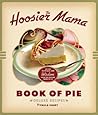
The Hoosier Mama Book of Pie: Recipes, Techniques, and Wisdom from the Hoosier Mama Pie CompanyThe Hoosier Mama Book of Pie: Recipes, Techniques, and Wisdom from the Hoosier Mama Pie Company by Allison Scott
My rating: 5 of 5 stars

Our theme for Thanksgiving this year (other than Indian take-out, because that’s a given) was Pies, and thanks to every other patron of my local public library also taking a particular late-November interest in pie cookbooks, The Hoosier Mama Book of Pie was the only one that had made it out of my holds queue and into my house by Thanksgiving week.

So this is the book that three novice pie bakers paged through to determine our Thanksgiving pies!


I settled on Peanut Butter Pie with Chocolate Ganache. The kid picked Cranberry Chess Pie. My partner decided on Raspberry Pie, but then the kid was all, “...nobody’s going to make pumpkin?” so for love of his daughter, he condemned himself to also making a second pie, the Pumpkin.

We’re all notably basic cooks. As far as I know, the kid has never once so much as turned on the stove in her college apartment’s kitchen. I cook pretty often, but something usually goes wrong, and that something is me. For instance, I have attempted potato soup twice within the past year, both times using well-regarded recipes, and ruined it both times, even though I have the suspicion that potato soup is the easiest and most basic of soups. My partner at least will follow a recipe, but generally as ham-handedly as it’s possible for one to follow a recipe and still have it regarded as following the recipe. It’s like his reading comprehension tanks as soon as he starts reading recipe instructions. Which I feel like is a really fair thing to do, because for some reason recipe instructions are often so inscrutable!

I’m happy to report, however, that by Thanksgiving Day, the three of us had created four perfectly passable, perfectly delicious pies!


I did not believe that the graham cracker crust I made was going to hold together like a store-bought crust, and I still don’t understand how graham crackers plus sugar plus butter equal a functioning crust, but it did, indeed, hold together quite nicely. I don’t know if the peanut butter filling was my favorite--I somehow wanted it to be more peanut butter tasting, I guess?--but the chocolate ganache was AWESOME on it, and it made a ton. I heavily drizzled it on the peanut butter pie, and then dipped homemade rum balls in the rest, and now I’m going to have to do that the next time I make rum balls, too, because that was freaking delicious.


The all-butter pie crusts came out awesome, too, as did everyone else’s pies. We feasted so hard on them Thanksgiving morning that I spent the rest of the morning with a sugar headache, and to be honest, as soon as that felt better I went back for more pie.


P.S. View all my reviews

P.P.S. Check out my Craft Knife Facebook page for photos, resources, and other bits of the weird stuff I do all day.

Monday, December 8, 2025

I Cooked from Recipes from the World of Tolkien and It Turns Out That Hobbits Also Love Beans and Cornbread

From my November 2024 trip to Hobbiton!

Recipes from the World of Tolkien: Inspired By the LegendsRecipes from the World of Tolkien: Inspired By the Legends by Robert Tuesley Anderson
My rating: 5 of 5 stars

Reading this book inspired my sudden revelation about how many cuisines are centered around beans plus flatbread. I grew up in Arkansas eating pinto beans with cornbread (and here I am today in Indiana with a pot of beans in the crock pot right this second!), which isn’t exactly a flatbread but I think it’s close enough to count. When I moved to Texas for college I found bean burritos, and black beans and refried beans and corn and flour tortillas. And then I learned about lentils with injera or naan, and falafel with chickpeas, and the tragedy that is beans on toast, and those are all the cuisines I know but I’m sure there are plenty more delicious bean/bread combos out there for me to discover.

All that to say that my favorite set of recipes in this book is a bean dish paired with a cornbread dish!

Sitting down at the hobbits' breakfast table, waiting for my beans and cornbread to be served.

I really liked how the recipes here were mainly British-forward or British-inspired, but with a lot more flavor than I’ve come to expect from British cuisine. I’ve made the Smoky Stewed Beans three times, and it is a super easy one-pot recipe that uses canned beans and tomatoes, tomato paste, stock, and then a bunch of flavorful ingredients like red onion, red wine vinegar, smoked paprika, and mustard powder. It serves two with plenty of leftovers, which is perfect because it tastes better the next day, and it also works with frozen peppers and spinach tossed in to beef it up.


Every time I’ve made it I’ve made the Lembas Bread to go with it. Calling cornbread Lembas Bread kind of feels like an abomination, but the author has read the Silmarillion and I have not, and they say that Lembas was originally made literally from corn. So, cheesy herbed cornbread it is!


I actually think the Lembas Bread, especially when paired with the Smoky Stewed Beans, would be even more delicious with even more cheese and herbs, so that’s what I plan to do next time.

The Green Dragon! I didn't try their mushroom and leek pie, but it was definitely delicious.

From this book I’ve also made Beorn’s Honey Cakes, Farmer Maggot’s Wild Mushrooms, the Prancing Pony’s Potato and Garlic Soup, and the Green Dragon’s Mushroom and Leek Pie. I’m not a good cook so I need simple instructions and simple ingredients, which this book for the most part has. Only the potato soup was disappointing, but that is definitely my fault, because 1) I did not understand that “floury” potatoes are different from whatever potatoes I apparently used that gave the soup a kind of gluey texture, and 2) I added too much salt.

See? Not a good cook!

If this book was meant to be an “official” cookbook for the Tolkien books I’d have more issues with it, because there were barely any shot-by-shot remake-esque recipes or recipes you could see reflected in the actual texts. But for most recipes other than Cram or that elusive Lembas Bread, there are plenty of other resources for that sort of cooking. For Father’s Day this year, the kids and I did a “There and Snack Again”-themed Taste the Movie experience for my partner, keyed to the extended edition of The Fellowship of the Rings, and all I had to do was click through a couple of webpages to find a blog post that listed every food shown on screen and its timestamp. And if I’d wanted to get fancy and have a proper feast with book-accurate foods prepared using boring muggle ingredients, I’d just click a couple more times and have my pick!

I am at the Green Dragon drinking ale and leaning casually against a mantle.

But anyway, these recipes aren’t really meant to be book-accurate, as far as I can tell. They’re meant to be “from the world” of Tolkien, and “inspired by” the legends. So basically British cuisine with more flavor. Which is actually really useful, because although I would have liked to have had an authentically book-accurate Lembas Bread recipe, I’ll actually make this particular Lembas Bread on the regular, not just during a LOTR movie marathon.

P.S. View all my reviews

P.P.S. Want to follow along with my craft projects, books I'm reading, dog-walking mishaps, encounters with Chainsaw Helicopters, and other various adventures on the daily? Find me on my Craft Knife Facebook page!

Friday, October 3, 2025

This Disney Children's Cookbook is Exactly the Right Level for My Kitchen Skills

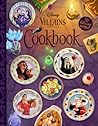
The Disney Villains CookbookThe Disney Villains Cookbook by Walt Disney Company
My rating: 4 of 5 stars

I am 49 years old, with what is apparently the cooking skill of someone at least 40 years younger, because this children's cookbook was EXACTLY my speed.

And I didn't even know that it was a cookbook for children when I checked it out of the library. What that says about me, I do not care to explore. But although I am mostly disinterested in cooking (if someone ever invents a middle-aged human chow with all the vitamins and nutrients needed by a perimenopausal woman, sold in 50-pound bags with instructions on the side about what size scoop you should dish out per meal, I will be incandescently happy and my life will immediately become 1000% easier), I DO love myself some thematically-appropriate novelty foods, and I thought this book might snooker me into actually, you know, using my stove this week.

Especially with the excuse to eat my dinner in front of a movie!

Alas for that last part, because this book's only flaw for me is that the recipes are VERY loosely associated with the Disney villain each claims to represent. I'll give it a point for the Spotted Scones to represent Cruella de Vil, because okay, chocolate chips are a cute idea for dalmatian spots and the book/movie IS set in England... but they don't actually represent Cruella, just the concept of the film. An actual Cruella recipe would be something like a black and white cookie. And the Black and White Bean Salad that comes later in the book and is also supposed to represent Cruella doesn't work, either, because black beans aren't really black.

The two recipes that my partner and I tried have even looser connections to their Disney villains. You're supposed to cut the Baguette Breakfast Beaks into triangles to represent Maleficent's raven familiar, but other than the fact that it's kind of gross to make an egg dish to symbolize a bird, cutting it into triangles is literally the only connection. And a baguette cut into triangles doesn't look like beaks? Captain Hook's Stuffed Shells is even worse, because even though the description notes that "Captain Hook and his crew would no doubt appreciate a warm plate of this ocean-themed dish," the absolute only ocean-themed part of it is the jumbo pasta shells. No nori, no seafood, no ocean colors, no crumbly textures to represent sand... just baked pasta with jumbo pasta shells.

Y'all, my grown-up autistic ass can barely accept this as even remotely on-theme. There's no way you're going to get a kid with any kind of neurological pathways to buy into it.

HOWEVER... the two recipes that my partner and I tried were DELICIOUS. And SIMPLE. And infinitely repeatable in a menu rotation. And super easy to riff on with whatever ingredients you have on hand.


The best part, though, is that the recipes are so clear and intuitive that you just have to make them while looking at the recipe exactly once, and then you can make them forever. The baguette bake is just beaten eggs, whatever veggies sound good, and a bunch of cheese baked in a hollowed-out baguette. I threw in some diced peppers and onion and chopped spinach and halved cherry tomatoes, my partner added bacon because otherwise he wouldn't be able to recognize the meal as food, and he and I killed an entire baguette's worth between the two of us. The stuffed shells is just a carton of ricotta, a beaten egg, whatever veggies and herbs sound good, and a bunch more mozzarella and parmesan layered casserole-style with cooked pasta and marinara sauce and baked. I threw in a ton of sauteed kale from my garden along with scallions and a shocking amount of fresh parsley, my partner added sausage, and my only regret is not going even harder on the greens because my partner and I FEASTED!


Seriously--if this is what cooking is actually like, then I can actually do it, and I actually enjoy it!

We watched Ted Lasso while we ate our stuffed shells, though, because that recipe is absolutely NOT Peter Pan-themed.

P.S. View all my reviews

P.P.S. Want to follow along with my craft projects, books I'm reading, road trips to weird old cemeteries, looming mid-life crisis, and other various adventures on the daily? Find me on my Craft Knife Facebook page!

Monday, January 29, 2024

Homeschool History/Culinary Arts: Homemade Chocolate

The teenager's Honors World History: Ancient Times study (2 semesters; 2 high school credits) is a LOT of work, because we're using two college textbooks as the spine for this DIY course:

This homemade chocolate project is relevant to Duiker Chapter 6, "The New World," and Gardner Chapter 14, "From Alaska to the Andes: The Arts of Ancient America." It also builds context with our study of Mesoamerica, and trip to the Yucatan Peninsula, from two years ago. We discussed the Ancient Maya's relationship to chocolate then--our local university's art museum actually has a Maya vessel that still has the dregs of ancient hot chocolate inside!--but we didn't do any hands-on chocolate-making projects during that particular study.

Yay, because it gives us something new to do this year!

This TED-Ed video about the history of chocolate is surprisingly thorough for being less than five minutes long, and since our study of chocolate is mostly contained to the Ancient Maya, it builds context by centering chocolate within world history:

If you'd rather your student read than watch, here's about the same level of content as informational text from the Exploratorium.

For our hands-on project, I bought this Make Your Own Chocolate kit from Glee Gum--the kids and I have actually done this exact same kit before, but since it was a whopping ELEVEN YEARS AGO(?!?!), I figured we might as well give it another go!

The kit is marketed to and suitable for young kids like my own long-ago wee ones, but it's actually quite suitable for this nearly-grown teenager and fully-grown me, as well--as long as you're a beginner chocolatier, I suppose. If you can temper chocolate in your sleep this kit probably wouldn't cover much new ground for you, but the teenager and I didn't find the instructions or the activity babyish or overly simplified. 

And look! We got to taste real cacao beans!


The kit is sort of like a Hello Fresh for chocolate-making, in that it provides the ingredients in the amounts needed, and then you heat and combine them as directed. I especially liked the sticker thermometer for easily taking the temperature of the chocolate. My teenager was more than capable of completing the entire project independently, so all I had to do was hang out, take photos, add weird mix-ins to the candy wrappers, and then enjoy all of the chocolate!


For mix-ins, we tried various combinations of candied ginger, dried unsweetened cherries, and peanut butter. The latter two in the same truffle was my favorite combo.

If you wanted to extend this activity even further, there are a ton of ways you could go:

If you live within driving distance, Hershey's Chocolate World in Hershey, Pennsylvania, would be a fun, educational-ish trip. They mostly want to sell you things, but if you're thoughtful, you can make the things that they sell you work as enrichment. We didn't visit The Hershey Story on our own trip, but it looks much more legitimately educational, ahem.

If your kid gets really into the foodcrafting part of the experience, you can buy more of the same ingredients from the kit and make more chocolate from scratch. Kid-made homemade truffles or chocolate bars would be such a lovely Valentine's Day project or handmade gift!

Another super fun but low-effort chocolate crafting project is coating random foods in chocolate. Chocolate-covered gummy bears ARE surprisingly delicious, as are sour gummy worms, mint leaves, and, um... Ramen noodles.

If you're working with a young kid, and don't want to mess around too much with molten chocolate, you could make them a batch of edible chocolate slime for a fun sensory extension activity. Or make modeling chocolate, which sculpts well and is also delicious!

Here are some books that pair well with making your own chocolate:

  • The Bitter Side of Sweet. Pair this with any chocolate study to bring insight and empathy to the serious problem of child enslavement that plagues modern chocolate production. 
  • The Book of Chocolate. This is a very readable history for apt middle grades and up. 
  • Charlie and the Chocolate Factory. It's not for the history buff, ahem, but it's perfect if you're doing the kit just to have fun with candy. If you've never read this book aloud to your kids, are you even a homeschooler?
  • Chocolate Fever. Yes, it's a children's book, but it's really, really good! Find an audiobook version that you can listen to while you do some of this food crafting, and you can probably get through the entire book in one session.
  • Making Chocolate: From Beans to Bar to S'more. This book is a completely excessive tome about making chocolate from scratch, but if you've got an older kid who's interested... well, you're homeschoolers for a reason!

P.S. Want to know more about all the weird math I have my kids do, as well as our other wanderings and wonderings? Check out my Facebook page!

Tuesday, January 2, 2024

How My High School Girl Scout Troop Earned the (*cough, cough* unofficial *cough*) Harvest Badge


Yes, we made up another Girl Scout badge.

I'm telling you, though, that if you've got a troop of older kids, especially Seniors and Ambassadors like I do, and you're not letting them make up badges, then you're sleeping on some of the best girl-led experiential learning that Girl Scouts offers!

Because if you've got a troop of older kids, I know you know that the official GSUSA badge offerings for those age groups suuuuucks. I'd way rather have a bunch of happy and engaged kids flouting the Girl Scout Badge Police than I would a bunch of bored kids reluctantly working through that same dang Robotics badge for the umpteenth time (Seriously, GSUSA? Three Robotics badges per level? At EVERY level?!? And they're all pretty much the same?!? Please hire me to revamp your badges I will do such an awesome job I swear). 

Anyway... during last Spring's budget/planning meeting my Girl Scouts got super revved up about this cute Harvest badge design--


--and decided that they wanted to earn it this autumn. And so we did!

The kids decided on most of the activities, and I fine-tuned them and sneaked in a few more educational bits. Our local council is also offering an Apple Quest fun patch this season (similar to the one I listed here), so I also bought those and we added in some more apple-themed activities to our plans.

Here are our activities!

Research apple varieties; taste-test apples.


For our apple pie meeting, each Girl Scout was asked to bring approximately five pounds of one apple variety, a small serving plate, and an informational label that they'd researched and created for that variety. 

At the start of the meeting, every Girl Scout sliced one of her apples (giving me a good chance to observe and make sure that they all had appropriate knife skills for our upcoming tasks) and displayed it on its serving plate, then we went around the room and each Girl Scout spoke about her apple variety while we all tasted it. Every apple variety was purposefully bred, so it was interesting to hear what characteristics each variety was supposedly bred for--and if we agreed! The kids also quickly noticed that the apple varieties browned differently, so that was interesting, too.

Make apple pie filling; make homemade pie crust; bake an apple pie; learn to decorate a pie.


As you can tell from the heading, this step accomplished a few of the required activities for the Harvest badge and the Apple Quest fun patch. The Girl Scouts were most excited about baking a pie and decorating it, and since apple pie filling is dead simple and my teenager knows exactly how to make homemade pie crust, I figured that baking an apple pie from scratch was juuuust about doable as a Girl Scout meeting.

And it just about was!

Here's what I asked each Girl Scout to bring:
  • approximately five pounds of any variety of apple
  • sharp knife
  • cutting board
  • mixing bowl
  • oven mitt
  • rolling pin
  • measuring spoons and cups
  • hair tie or bandana
A couple of the cleverest kids (or the kids with the cleverest parents!) also brought a vegetable peeler and/or a cutting/coring thingy and a dish towel. I attempted to teach everyone how to easily peel and core an apple with just a paring knife, but this did NOT go over well--the kids hated the very idea of it, and they traded around the peelers and corers instead. Kids these days!

I used troop funds to buy all the pie crust and the rest of the apple filling ingredients, as well as aluminum foil, plastic wrap, aluminum pie tins, a 12-pack of Mason jars, and several prepared pie crusts.

After everyone had taste-tested the apples, my teenager taught the rest of the Girl Scouts how to make pie crust from scratch, while my co-leader and I assisted. It was a process, but everyone did create a pie crust! 

The kids wrapped their pie crusts in plastic wrap and put them in the refrigerator to chill while I taught everyone the dead simple process of making fresh apple pie filling from scratch. I encouraged the kids to use a variety of apples, relying on their taste-testing to help them choose, and to taste the filling as they went to make sure that it was to their preference. We might have a picky eater or two in the troop, ahem...

When the pie filling was ready, the kids took their pie crusts out of the refrigerator and learned how to roll them out and put them in the disposable pie tins I'd bought. They added the filling, then rolled out their top crust and decided how they wanted to put it on. When planning this meeting, the kids had been interested in learning how to decorate their pies and make cute pie crusts, so I showed them several inspo images from Pie Style, but everyone ultimately decided to make a lattice top, which was a new skill for most.


Then the kids crimped the edges, wrapped their pies VERY well in plastic wrap... and put them back in the refrigerator to take home. We did NOT have enough room to be baking five whole pies at once!

Instead, I brought out the prepared pie crusts and the kids used those, along with any remaining apple pie filling, to make hand pies and/or muffin tin pies. I think they might have liked that activity the best, because they baked quickly and then the kids could eat them!

Learn strategies to use up surplus apples.


Food waste is one of my personal issues (and the troop has those pesky picky eaters!), so it was important to me to show the kids some ways to preserve or prepare apples that you don't feel like eating out of hand or in a pie.

Both applesauce and apple juice are the easiest thing in the world to make, so I had both my giant stock pot and my very old juicer (it was a wedding gift!) out, and at the start of the meeting, since applesauce does take some time, I asked the kids which they'd rather make. They agreed on juice, so at the very end of the meeting, after each kid had cleaned up but before she left, she got to juice herself a pint jar's worth of apple juice to take home with her. This was a new experience for almost everyone, and I think they all really liked it! 

And, of course, the most important strategy to use up apples: while the kids worked, they threw all of their peels, cores, and scraps into a giant bowl in the middle of the table. After we'd cleaned up, I tossed the entire bowl of scraps to the chickens, and they feasted!

Create an apple recipe book.


Since most of those apple pie activities has been to earn the Harvest badge, the kids needed, in my opinion, one more apple-centric activity to completely earn the Apple Quest fun patch, so I made a Shared Google Doc and asked them to each contribute one apple recipe so that we could make a little cookbook.

I'd hoped they'd get super into the project, and at that time we had an upcoming volunteer date at a local food pantry so I also had it in my head that perhaps we could print the recipes into a little booklet for the pantry to hand out during those times when it was swamped with apples, but the kids did not get super into the project, and so we didn't do anything more with it. 

To be honest, I think they were just flat-out sick of apples! But the project did remind me that my favorite cake, Smitten Kitchen's apple cake, exists, and it's just as delicious as I remembered, so as far as I'm concerned the whole thing was a huge success. 

Contribute to a harvest meal for someone in need.


The kids definitely wanted to do a service project as part of this badge, but they dithered a bit over what, exactly, they wanted to do. Also remember that high school kids are VERY busy, and some of these kids were also working on college applications, scholarship applications, Gold Award applications... It is a lot of work to be a high school student these days!

I researched a few opportunities for them to consider, including serving a meal at one of our city's shelters or hosting a food drive for one of the local food pantries. The idea that the kids liked best, though, was volunteering on a specific day to help food pantry patrons choose the components for a Thanksgiving dinner. So the Saturday before Thanksgiving, we went to the food pantry's distribution location and helped fetch and carry and otherwise made ourselves useful. I carried soooo many frozen turkeys!

Make an autumn craft.


The kids wanted to make gnomes, but we kept running out of time to make them. Eventually, when we met to wrap the gifts they had bought for the kid we were sponsoring for Christmas (for the same food pantry as the Thanksgiving project!), I tacked gnome-crafting onto that meeting. 

I actually had almost everything for this gnome project already in my stash, so I just bought a faux fur remnant, rice, and hot glue. The gnomes all turned out sooo cute, with bodies made from one of my partner's old Henleys and hats made from some of my infinite felt stash. 

References and Resources


Here are some other resources I had available during our Harvest badgework:

  • The Apple Lover's Cookbook: This book has photos and information about lots of apple varieties, and the recipes are good for Girl Scouts to flip through to see all the yummy possibilities for cooking with apples.
  • The Book on Pie: The recipes in this book look DELICIOUS, so it was another book that was fun for Girl Scouts to flip there. There are so many kinds of pie!!!
  • Pie Academy: This has good process photos, especially of making the pie crust and making a lattice top. It has several different pie crust recipes, and some unusual recipes for pie fillings (one contains KETCHUP!?!?).
  • Pie Camp: This was my main reference book for the pie meeting. I taught the kids McDermott's "20-20-20" method for baking, passed on her tips for preventing a soggy bottom, and demonstrated how to make and use the foil shield that prevents a burned top. We also used her cooking instructions to make the muffin tin pies.
  • Pie Squared: These are essentially sheet pan pies, both sweet and savory. This would be a good recipe book if you wanted to serve fresh-baked pie at your Girl Scout troop meeting.
  • Pie Style: Even though it was plenty for the troop to learn how to make a lattice pie crust, because decorating pies was something they'd expressed interest in I showed them the photos from this book of faaancy pie decorations. Everyone went "Oooh!," but nobody wanted to give any of the ideas a try just then, ahem...
Overall, I think this turned out to be a very successful badge! The kids wanted to do it and helped plan it, everyone learned a new skill, a couple of kids got a chance to practice their leadership by teaching the others specific techniques, we did some community service, and now each kid has some more practical life knowledge in her toolkit. 

Up next: cookie season, including seeing if I can sneak in a cookie badge or two, and travel planning, including me looking for yet another retired or Council's Own travel-focused badge that these well-traveled kids haven't yet earned. 

Hire me to create more travel badge for older kids, GSUSA! I'll do an awesome job!

P.S. Want to follow along with my craft projects, books I'm reading, dog-walking mishaps, road trips, and other various adventures on the daily? Find me on my Craft Knife Facebook page!

Monday, September 25, 2023

Homeschool AP US History: American Cake

There's a certain view of history pedagogy that feels that hands-on projects do not belong in history study. When you make a paper model of Jamestown, this view would say, you're learning not about Jamestown, but about making paper models.

In some ways, I do get where this is coming from. Lots of hands-on projects, especially for preschool/early elementary, are garbage. Like, garbage in general, as well as garbage at helping a kid explore history. Hint: anything involving a paper plate or paint chips or a brown paper lunch bag is probably garbage.

But other hands-on projects, I firmly believe, are indispensable, at least in the homeschool environment which is where all of my experience lies. And it's not so much because the craft, itself, is just that amazing--it's the context! When my kids built their paper Jamestown models, we read children's books about Jamestown and looked at images online and talked and talked and talked and talked about Jamestown together. Tiny Jamestown lived in our house for years, and we talked even more about it whenever the kids brought it out for their small-world play. When the kids created World War II propaganda posters, we read about propaganda posters and looked at images of propaganda posters online and talked and talked and talked and talked about propaganda posters together. Printed copies of their hilarious propaganda posters lived on the walls, and were subjects of family inside jokes, for years. 

So, yeah. If I just told the teenager to make a cake, a modern replica of a popular cake from the 1700s, for an AP US History enrichment project, that wouldn't be very educational. It certainly wouldn't be AP-level rigorous.

Instead, with an eye to building context, it was a family event that kept us up until midnight but built valuable historical and cross-curricular connections for the teenager. 

And it resulted in what is our new favorite family cake!

American Cake tells the history of the US, and the history of cooking, AND the history of food production, through cakes. Throughout the course of the book, you follow the evolution of ingredients like butter and eggs and milk from the organic, unpasteurized, produced-at-home product to what it is today. Same with flours, sweeteners, and all the other ingredients we commonly use in cakes. As well, you get a history lesson about the overall time period for each cake, and the specific history involved with its creation and consumption.

The cake that the teenager chose to make on this night, for instance, is the Fraunces Tavern Carrot Tea Cake. Fraunces Tavern, in New York City, is where General George Washington hosted a magnificent feast on British Evacuation Day, and this was one of the cakes on their menu at the time. It's an interesting cake because it includes cooked carrots to add sweetness in concert with the expensive white sugar, and instead of baking soda, which wasn't available then, you have to cream the crap out of the butter and sugar, whipping enough air in that it'll expand in the hot oven and make your cake rise a bit.

While the teenager made the cake, Matt and I served as her sous chefs, and we all used the time to talk about George Washington and the Revolutionary War. The teenager remembers, a little, our trip to Fort Necessity one autumn, which, along with our other side trips to Valley Forge, the Delaware River crossing site, and Mount Vernon, make a fairly decent timeline of Washington's life and career. Fort Necessity and Valley Forge are especially important to helping one remember that Washington was a nepotism baby who got his big break, a surveying job (scored without the usual required apprenticeship, because nepotism), from his brother's father-in-law, and Mount Vernon, itself, from his brother, who died young from tuberculosis.

Here's the carrot cake batter, poured into a springform pan that I did not realize we owned:


Another new-to-me appliance: a carrot peeler! I've just been using a paring knife like a jerk, but apparently the teenager has owned a carrot peeler for a decade or so, ever since that year she had a subscription to a children's cooking club that sent her a little kit every month, and this was the first time she decided to let me know about it.

I had never in my life used a carrot peeler before. It is BRILLIANT!

Because we were baking a tavern cake from the time of the Revolutionary War, it seemed appropriate to listen to Revolutionary War-era tavern music while we worked!


And then that reminded me that I should show the teenager the pro-shot Hamilton musical before our Disney+ subscription ends next week, so that's this Sunday's Family Movie Night sorted!

You won't be surprised to learn that without baking soda or baking powder, the cake didn't rise a ton, but still, it was fluffy and moist, even though the teenager and I cut it open piping hot from the oven at the stroke of midnight. We were pretty sure we'd ruin it by doing so, but we could NOT wait until morning to try it, so we cut ourselves fresh pieces, I slathered mine with clotted cream, and we had ourselves a little midnight party.

By the next morning, there was just three-quarters of the cake left, and by that night, all that was left was this:


This cake? Was DELICIOUS! I already love carrot cake, and this is a less-sweet version. It's carrot cake that doesn't give you a headache ten minutes later! Carrot cake, but when you eat it you can actually taste more than just sugar!

Fraunces actually became Washington's steward during his presidency, so it feels safe to assume that his tavern's special cake was probably on the menu at least occasionally. I'm sure the sugar didn't help the terrible state of his teeth, but cake IS pretty soft...

Wednesday, August 9, 2023

I Made Some Oven Mitts, and I'll Probably Make Some More


It was my birthday last week, and the kids and I had made all kinds of plans. The teenager tipped me off on signing up for birthday freebies, so we had some of those to pick up, and we also thought it might be fun to buy iced coffees and hang out for a while at our favorite indie bookstore. For dinner, a local pizza place gives you your age as a discount on your bill on your birthday, and at 47, I feel like I am finally old enough to really work that discount! Afterwards, Matt said he would set up the projector in the family room so we could all eat cheesecake and watch my favorite movie on a super-sized screen.

But first, the kids had to cool their heels for a couple of hours, because I told them that what I REALLY wanted to do the most on my birthday was sew some new oven mitts!

Our current oven mitts were all old and raggedy, which doesn't actually bother me, but Matt kept somehow grabbing pans with the raggediest part of any given oven mitt and burning himself, which is obviously not an oven mitt success story.

So I found this oven mitt pattern from Suzy Quilts, printed it out, and spent part of my birthday happily sewing away!

The exterior pieces are canvas--a couple of years ago, I got into buying canvas remnants whenever I stopped by Joann's, and for a while I was sewing all kinds of stuff with it, but now it's just sitting in my stash and I'm stoked to have a good use for it!--and cotton batting. I bought a TON of cotton batting yardage online during the Covid lockdowns (just between us, I mathed incorrectly and waaaaay overordered, ahem), and after being used on tons and tons of quilts over the past three years it's finally down to a scrappily remnant amount, as well.


The interior pieces are all quilting cotton of unknown provenance and in patterns that I LOATHE, but I keep it around anyway because quilting cotton! So useful! So a couple of these oven mitts have American flag insides, and a couple have pitchfork and straw hat insides, shudder. Don't look inside my oven mitts!

Here's a little of the quilting on the exterior pieces:


These oven mitts sew up SO quickly! I put a few shortcuts into the Suzy Quilts tutorial to make it even quicker, so if you, too, want the absolute quickest way to a new oven mitt, do this:
  1. Follow all the regular steps to cut out the pieces, baste the lining to the fabric, quilt the exterior pieces, sew the two interior pieces together and the two exterior pieces together, and turn the exterior side of the mitt right side out.
  2. Insert the interior side of the mitt (which should still be inside out) into the exterior mitt. The two parts of the mitt should be wrong sides together.
  3. Turn the raw edges of both parts to the inside, clip it well with those super handy plastic clips you finally bought yourself after seeing them on Tiktok and wanting them for years--

--and sew around the edge to finish!

Here's a photo of Luna helping me photograph my brand-new oven mitts on the back deck, right before the kids and I headed off for iced coffee, my free Crumbl cookie, and a couple of hours of book browsing:


These oven mitts have been in use for a week now, and we love them! The two layers of canvas, two layers of quilting cotton, and four layers of cotton batting feel like plenty of insulation, and the size works for every hand from the teenager's to Matt's. Even though I don't think we need more than four oven mitts in our rotation, I'm very tempted to make more while I have the canvas and the cotton batting and a pattern I love at my fingertips. I could save a couple each for these kids' future first apartments, and I could put a few in my handmade presents stash, or just set them aside to replace these when they get worn.

Actually, though, our current hot pads are just as old and raggedy, so maybe I should make some new ones to match my new oven mitts!

Tuesday, March 7, 2023

The Best Homemade Play Dough Recipe

2011 play dough creation

I don't remember the last time my kids genuinely played with play dough for fun, but I still make this homemade play dough recipe almost every week.

I sell the play dough, undyed or dyed the color of your choice, by the pound in my Pumpkin+Bear etsy shop, but I don't see why you can't simply have the recipe so you can make your own!

2008 play dough creation. I added glitter to the blue one!

The recipe makes about one pound, three ounces of the softest, squishiest play dough you'll ever feel. It's reluctant to dry out, it holds shape well, it's soft enough to feel awesome on your hands but firm enough that playing with it strengthens those little grip and finger muscles, and it dyes like a dream. 

And it takes VERY little time to make! Certainly a LOT less time than it takes to drive to Wal-mart and back for Play Doh!

Another 2011 play dough creation

Here are the ingredients you need:

  • 1 cup flour. I try to use the cheapest flour I can find for this recipe, usually bleached all-purpose. However, when my kids were tiny and sometimes "needed" play dough right that minute, I used to use whatever flour I had on hand. I've used unbleached flour, wheat flour, and on one personally very sad occasion, organic flour (grr! It's so expensive!), and the play dough always came out great. I know different flours will change the necessary water content, though, so if you're trying for something specific, you'll probably want to experiment a bit.
  • 1/2 cup salt. The gold standard for this is, again, the cheapest iodized salt you can find. A couple of times I've run out and used salt with a larger grain, and although it worked, you can definitely see and feel the larger grains in the finished play dough. Cheapo iodized salt, however, will make your play dough as smooth as butter!
  • 2 tsp cream of tartar. Cream of tartar aids consistency and stability, so you can skip it if you need to, but the play dough won't be as nice in texture or as long-lived. 
  • 1 tbsp oil. Again, any oil works for this recipe, but I like to use the cheapest available. Canola is the cheapest, but if all I have on hand is olive, I'm just as happy with the finished play dough. You'd think that the color of olive oil would affect the tone of the finished white play dough... but it doesn't!
  • 1 cup water. 
  • dye (optional). If you want to dye your entire batch a single color, dump it into the pot with the rest of the ingredients. Otherwise, knead the dye into the finished play dough. I have tried every dye I can think of, from the cheapest to the nicest store-bought food dyes, homemade and store-bought natural dyes, liquid watercolors, and powdered tempera. For color saturation, my favorite BY FAR is powdered tempera! It will stain your hands while you're kneading it into the play dough but it won't stain your hands while you're playing with it. It also lightens the play dough in a way that feels absolutely magical and wreaks absolute hell on my ability to fit a full pound of play dough into the containers I sell it in. 

Step 1: Add all ingredients to a single pot.


Just dump it all  in!

Step 2: Cook over medium heat, stirring continually. 


This is time-consuming, because you want to cook the play dough low and slow so you don't scorch it, and you have to stir it continuously to keep it from sticking to the pot. I've never timed myself, but I do get through several minutes of a podcast or streaming show while I stir.

When the play dough loses its gummy appearance and wants to ball up, remove it from the heat and remove the play dough from the pot.

Put the pot to soak in the sink before you even try to wash it, because flour + water = glue!

Step 3: Knead until smooth.


When you dump the play dough out onto your work surface, it will look like this:


As soon as it's cool enough to touch, knead it until it looks like this!


Here's the final weight of my finished play dough:


It's ready to play with immediately, and will keep for several weeks in the refrigerator in an airtight container. When my kids were little, I'd toss it when it started looking dirty from their play, but also toss it immediately if it smells rancid or the texture and consistency change for the worse. 

P.S. Want to follow along with my craft projects, books I'm reading, road trips to weird old cemeteries, looming mid-life crisis, and other various adventures on the daily? Find me on my Craft Knife Facebook page!