Showing posts sorted by date for query de smet. Sort by relevance Show all posts

Friday, August 14, 2026

George Washington Carver Was So Awesome WHY WAS EVERYONE SO MEAN TO HIM?!?!?!?!

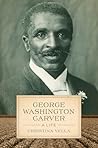
George Washington Carver: A LifeGeorge Washington Carver: A Life by Christina Vella
My rating: 5 of 5 stars

ME, worriedly, every so often: "Please don't tell anyone how much I hate Booker T. Washington so they don't think I'm racist."

ALL FAMILY MEMBERS: "Okay, but you're the most likely person to tell someone that."

And fine, it's true, so here we go:

I hate Booker T. Washington. I think he did a really terrible job running the Tuskegee Institute (he did a really great job founding it--he just did a really terrible job running it!), I think a lot of what he said and did was wrongheaded, I think he should have been open to other leaders' ideas of how best to lift up their people instead of just stubbornly following his own personal brand of black-and-white thinking, I think he got distracted by showmanship too often.

But most of all, I hate him because he was really, really, REALLY mean to George Washington Carver for literally no reason. Washington acted like his whole purpose in life was to serve his people, and then turned around and stole away probably the greatest genius of that time and hid him away and made him work like a dog without any of the resources he could have so easily provided and then when Carver created miracles anyway, Washington acted like those miracles were garbage and just continued trying to stomp Carver down.

And for some reason beyond all comprehension, or really just because that's the kind of guy he was, George Washington Carver LOVED Booker T. Washington, loved him and admired him and had so much affection for him, and in return, Washington's every action toward Carver (after, of course, he'd gone to all the trouble to woo Carver into taking that job at Tuskegee) was filled with just palpable contempt. In George Washington Carver: A Life, author Christina Vella writes that every Christmas, Carver made these beautiful hand-painted Christmas cards for all his favorite people. They were masterpieces. Washington always got one, and barely even acknowledged them. But the next year, Carver would go right ahead and paint him another beautiful masterpiece, and Washington would again be all like, "Meh." But after Washington died (yay!) and another guy took over as head of Tuskegee, Carver went to all the trouble to make that guy his very own hand-painted Christmas card, too, because he was just that nice.

And that guy was so touched that he wrote Carver a genuine multi-paged THANK-YOU NOTE FOR THE CHRISTMAS CARD. THAT'S HOW MUCH HE LOVED IT.


Ugh, Booker T. Washington!

Honestly next I should probably read a proper biography of Booker T. Washington, because right now he exists solely in my mind as a cartoon villain.

He really was VERY mean to Carver, though.

Which I feel like is a pattern that started when Carver was a newborn! Susan and Moses Carver, the people who raised him from the time of his mother’s abduction (at least the official story is an abduction--I’d tell you what I think happened, but I feel like I have already expressed an unhealthy amount of George Washington Carver-centric conspiracy theories in my life and I think I'm already not getting invited to parties about it) to the age of nine or ten, allowed that nine- or ten-year-old to leave home and figure out his own means of sustenance and support when little George, with a knack for learning, decided that an education was what he really, really, really wanted for himself. Vella writes somewhat bemusedly that George didn’t seem to remember much of his childhood and/or would often simply tell some amusing anecdote that he’d contradict in a later interview. She attributes it to absent-mindedness, in that his focus was always elsewhere, but honestly I don’t buy it. As an adult, this dude seemed VERY focused on interpersonal relationships. He treasured his friends, and was kind to fans and acquaintances. I feel like if he couldn’t remember his childhood enough to even give a consistent count for the number of siblings he had, there was a reason for it. And if it wasn’t a memory issue but instead that he didn’t want to talk about his childhood and fiction was easier, well, there was a reason for that, too.

Thank goodness little unhoused Carver met people along the way who did help and nurture and support him, although he clearly witnessed and experienced a lot of trauma, too. And he made his own way. He cleaned houses, he took in laundry, and Vella tells a story in which as a child he talked his way into a job as a personal chef and to cover the fact that he didn’t know how to cook he got the lady of the house to demonstrate how to make every single dish so that he could, as he told her, “make it the way you like it.” And after that, he did!

After making his own way in the world, traveling to wherever there was a school he could learn in, pausing his enrollment periodically as he ran out of money, he finally got enough education to be accepted to Highland College in Kansas. He used the rest of his money to get himself there, but when he showed up, the head of the college was all like, “Oh. Yeah, we don’t actually admit Negros,” and Carver had to simply walk away, broke and with his dreams dashed AGAIN.

I hate you, too, Highland College.

Carver was, if anything, even more poor when he was finally able to attend Simpson College, an art school, and then after that, thanks to a teacher who took him under her wing, Iowa State College. But I feel like Iowa State was where he was the happiest in his entire life. He still cleaned and took in laundry, but Vella notes that his teachers and schoolmates and neighbors would make sure he at least had tons of work, because that’s the only way they could get him to take their money. In 1893, four of his paintings won entry into the Chicago World’s Fair, and Carver was going to get to go see them there. But all his clothes were garbage. So one day, some of his classmates literally kidnapped him off the street, manhandled him into a department store, forced him to try on clothes, and then bought him a beautiful new suit, completely against his will.


And you guys. I cry every time I tell this story, because it is literally so sweet and SO insane, because Carver basically NEVER TOOK THAT SUIT OFF AGAIN IN HIS ENTIRE LIFE. I mean, like, I’m sure he had pajamas, and he spent a lot of time in a lab coat, but if he was dressed up and out and about, he was wearing that suit. That twenty-year-old suit. That thirty-year-old suit. That FORTY-YEAR-OLD SUIT. It was always clean--Carver, after all, was a laundry man!--and it always had a fresh flower in its lapel, but people started to not be able to tell what color it was supposed to be. It was probably, like, dry rotting or something at some point. And sometimes, someone would be like, “Buddy, you want to get yourself a new suit or something?” And Carver, even after he finally had some money--although he never had money like he was supposed to, because Tuskegee never paid him a decent salary, much less the salary he deserved--would just be like, “But clearly I already have a suit I am literally wearing it right now?”

So here’s the thing: Vella makes very clear that Carver was super happy at Iowa State. Some people were for sure racist towards him but a lot of people were not, he had friends, he had mentors, he was learning and he loved it, he was blowing everyone away with how smart he was and how nice and how good he was at everything, and he already had an excellent job lined up right there as soon as he graduated, because these professors did NOT want to let him out of their sight, he was so awesome.

Enter Booker T. Washington.

And okay, to be fair to Washington, the people of Alabama, Black and white but especially Black, were just absolutely beyond destitute at this time. Anything that anyone could do to help them was a very good thing. But Washington had a very black and white, VERY limited idea of what was best for Black people as a whole, and he didn’t give a fuck that it wasn’t what many Black people wanted for themselves--he was going to do for them what HE wanted to do for them, and that’s it.

And what he wanted to do for them wasn’t so much to offer a proper school education, although to be fair Tuskegee did teach literacy and numeracy, but essentially to offer more sophisticated farming and industrial education. I think it was this weird wanting to serve his people but also hating intellectualism vibe that Vella describes that made him 1) work as hard as he did to woo Carver away from his perfect Iowa State prospects, but also 2) shit on everything Carver tried to do and act contemptuous of all his accomplishments and thwart all his efforts because Carver was clearly very intellectually gifted and treasured intellect, and that shone through as much as his kindness did.

So Washington refused to fund Carver’s teaching lab, causing Carver to resort to garbage picking and DIY to stock it. Carver scored a very prestigious federal grant to host an experiment station at the school, and Washington refused to assign him a consistent staff to work it. When Carver succeeded with the station anyway and published useful educational brochures, Washington refused to have them printed. It got so bad that when Washington learned that Carver had been teaching--for free! in his free time!--an extremely popular Bible study class for the past three years, he immediately shut it down. Tell me one reason why he’d do that that’s not from simple spite!

Tuskegee could have furnished his lab if they'd wanted to.

Also, I’m very open to the possibility that the author is biased against Booker T. Washington and has simply passed it onto me. Like I said, I need to read a proper bio about him!

But you know what? Carver took Washington’s contempt and Tuskegee’s garbage and with them, he performed wonders. He genuinely saved Alabama, and the South as a whole, with his research and outreach. Enslavers had used their access to free labor to monoculture cotton to such an extent that the land was completely devoid of nutrients, and so everyone who was still trying to live off the land had resorted to simply growing more and more of that same monoculture just to chase any kind of profit. People were malnourished because they’d converted their kitchen gardens to cotton. Same with their livestock yards. Part of Carver’s extensive research and outreach was finding nutritious, cheap crops and livestock that fed people, turned a profit, and also healed the land. Sweet potatoes. Hogs. PEANUTS!!! People were also longing for more elevated lifestyles but weren’t sure what that would consist of, so were spending their precious money on stupid stuff like fancy clocks and organs that represented culture to them (tangent, but I thought this detail was VERY interesting, because way north in De Smet, South Dakota, the Ingalls family was also spending their precious money on a stupid organ!). So Carver researched methods of making beautiful paints cheaply from the local soils, then taught everyone how to paint their homes and furnishings so they could have pretty things around them without wasting their money.

Another tangent: all throughout the book, Vella just keeps on referring to Carver’s “woman’s voice.” She genuinely goes out of her way to bring this up ALL THE TIME. Carver meets someone famous--they must be surprised to hear his woman’s voice! Carver gives a lecture--people probably thought it was strange hearing a woman’s voice! At one point, I swear she is absolutely giddy because Carver met a woman whom she says had an unusually deep voice, and she’s genuinely all, “OMG I BET IT SOUNDED SO WEIRD! BECAUSE HE SOUNDED LIKE A WOMAN AND SHE SOUNDED LIKE A MAN! AND WHEN THEY TALKED TO EACH OTHER IT WAS LIKE THE OTHER PERSON’S VOICE SHOULD BE COMING OUT OF EACH OF THEIR MOUTHS! HAHAHAHAHA!!!”

So anyway, I kept reading her taking these shots at Carver’s voice and being all, “Dude! Why is she obsessed with saying he sounds like a woman?” So I got on YouTube to see if there are any videos of Carver speaking.


There are. And fine, he sounds like a woman. Just… Vella acts weirdly excited about it, okay?

Anyway, *I* was very excited in the book when Booker T. Washington died, even though it caused Carver to go into genuine mourning for months and also donate half a year’s worth of his pitiful salary to a memorial for that asshole. I’m just so mad at how much of his life he gave up for that man.

There’s another whole weird part of the biography concerning how Carver apparently also gave up another huge chunk of his life to massaging people with peanut oil, because it got published in the newspapers as a miracle cure, causing people to show up from everywhere all the time asking him to, and he was too nice to say no. It’s super weird, though.

Another weird part: although everyone online seems to think that Carver was queer because he was life partners with the lab assistant he had late in his career, Austin W. Curtis, Jr., Vella does not think that this was true at all. Honestly, she low-key makes Curtis out to be a villain who made secret deals behind Carver’s back to profit off of their professional partnership and their friendship. Instead, she puts forth the VERY convincing case that Carver was queer because he was deeply in love with a much younger man whom he met through church stuff. He wrote him obsessive letters for years, letters in which you can literally feel the agonized longing, translated into Jesus-speak. This besottedness went mostly unreciprocated, poor dude. Honestly, I think Carver was probably aroace. His letters of religious fervor to that dude did sound pretty sexy, but I dunno, religion can be weird like that.

Eventually, Henry Ford befriended Carver and built him the fanciest of fancy labs. But you guys, you might as well go ahead and start crying with me again, because by then, Carver was too frail to get much use out of it. He just always worked so hard, and I feel like he never got exactly what he deserved out of life. I guess he’d be proud of his beautiful George Washington Carver Museum at Tuskegee, although I’m low-key mad about it, but his other memorial is literally at his enslavers’ house sooo…

So… I dunno, you guys. All I know about George Washington Carver I learned from his national park site and this biography and some really sketchy online content that I do not believe. People are such weirdos. So, did Vella do me dirty? Is Booker T. Washington actually awesome and now I hate him for no reason? Was Curtis really Carver’s lover and Vella simply won’t say?

Is it super weird that she kept saying he had a woman’s voice? I mean sure, it’s high-pitched--okay, it’s remarkably high-pitched--but she’s being weird about it, right?

P.S. View all my reviews

P.P.S. Want to follow along with my craft projects, books I'm reading, road trips to weird old cemeteries, looming mid-life crisis, and other various adventures on the daily? Find me on my Craft Knife Facebook page!

Monday, July 20, 2026

I Hate Pa Ingalls the Most, but Laura Might Hate Ma

Schoolhouse from the time that we visited the Ingalls' homestead in De Smet, South Dakota.

The Long Winter (Little House, #6)The Long Winter by Laura Ingalls Wilder
My rating: 5 of 5 stars

Because if she doesn’t, then why is she always painting her as such a bigot? We all know by now that Ma hates the native peoples from whom the government stole the land they’re living on, so we’re not surprised by this iteration on that theme:

“What Indian?” Ma asked him. She looked as if she were smelling the smell of an Indian whenever she said the word. Ma despised Indians. She was afraid of them, too.


We know that Laura does not share this particular bigotry, or at least not to the extent that Ma does, both because she sometimes portrays native peoples positively in her books, but also because she portrays Pa as explicitly NOT bigoted against them. Pa is her ideal, and I can’t think of a single instance in the entire series in which he’s portrayed in a way that Laura would think was negative.

Ma, however… Ma is also bigoted against immigrants!

She did not like to see women working in the fields. Only foreigners did that. Ma and her girls were Americans, above doing men’s work.

But then, of course, Ma “lets” Laura help Pa with haying regardless, as long as nobody sees them, because Laura is the most parentified child in all the land.

This latest re-read of The Long Winter, just after finishing the non-fiction book The Children’s Blizzard that discusses the climate in the Dakota Territory and how unsuited it is to the settlers’ farming techniques and lifestyles and how especially dangerous it is in the winter, was startling. I had not remembered exactly HOW dark this book is, how bleak, how close to dying this family genuinely must have come, how these several months of starvation must have harmed them, physically and emotionally, for the rest of their lives. Grace was a toddler who spent seven months living in two rooms, being constantly too cold, and eating mostly wheat and a little fat. Carrie was only ten. Laura was only thirteen. Laura doesn’t mention rickets or scurvy or other signs of malnutrition, but I think historical record tells the tale well enough, in that all three younger sisters died of diabetes, while Mary died of a stroke.

Ever since I read Prairie Fires and have started learning all I can about the VERY contentious relationship between Laura and Rose, and the subtext of Laura’s relationship with Almanzo, I’ve been very interested in how Laura depicts her family in her books. She wrote these books in conversation with Rose, so I’m curious if any of these depictions might have anything to say about their relationship. She wrote them as fiction, but sometimes only lightly fictionalized, so I’m also curious about what she might have tried to tell more truthfully and what she might have fictionalized harder. And because she had SUCH a difficult relationship with Rose, and because Rose so clearly did not like Laura, I’m very curious about how Laura depicts Ma, in particular. I think she mostly wants to treat her as a perfect parent, but she does show her with flaws.

Other than the bigotry, Laura also depicts Ma’s impatience a couple of times, along with her own. Mary is never depicted as impatient or rude, but Laura cleverly manages to write all of Mary’s dialogue as the smuggest, most mealy-mouthed, annoyingly know-it-all declarations so that you want to just step in and slap her face for Laura. Carrie is depicted in not an idealized light like Pa, but rather a sympathetic light that reads as even more loving than Laura’s constant Pa praising, and Grace simply exists. I don’t think Grace and Laura ever interact in this book!

I also think it’s very interesting how Laura depicts herself. She’s very dutiful, always ready to chip in and do more than her fair share of labor, ever the hardest worker in the family, but I don’t feel her taking a lot of pleasure in anything. Which is fair, since this IS The Long Winter. But other books, particularly the ones that I think are more influenced by Rose’s Libertarianism, are SO overtly about this self-reliance and the enjoyment of pleasures in the midst of hardship and the early 1900s political ideals that privilege the state of rugged individualism that it’s also a little surprising that Laura didn’t try to insert a few happier scenes. It’s possible that she was literally just that traumatized by her memories of that winter that she literally couldn’t. Or she used the Wilder brothers as her avatars of happy rugged individualism, instead.

But she did achieve her main goal, which was to never admit to anyone that Pa was a fool who dragged them out into the middle of nowhere, with only one single rail line between them and death. I bet that little house in the big woods that he made them leave behind was soooo cozy and comfortable that winter!

Unrelated to the rest of my review, but the scene in The Long Winter in which a blizzard strikes while the children are in school, and the children and schoolteacher try to walk back to town and barely avoid accidentally wandering off into the prairie to die instead, reads so much like the real events of the Children's Blizzard that I started that book thinking it was also describing this winter. But it's not! Buuuuut that Children's Blizzard was so widely written about in newspapers that I wonder VERY much if it informed Wilder's account here.  

Also unrelated, but you know the happy sunflower song that Pa sings every freezing winter morning? This is it!


And here's Captain Jinks!


P.S. View all my reviews

P.P.S. Want to follow along with my craft projects, books I'm reading, road trips to random little towns, looming mid-life crisis, and other various adventures on the daily? Find me on my Craft Knife Facebook page!

Thursday, October 3, 2024

I Read Prairie Fires, and I'm Pretty Mad about Rose Wilder Lane

paying my respects (with awful white balance) in 2012

Prairie Fires: The American Dreams of Laura Ingalls WilderPrairie Fires: The American Dreams of Laura Ingalls Wilder by Caroline Fraser
My rating: 5 of 5 stars

So you know how I’ve mentioned before that if Pa Ingalls has no haters in this world, then it’s time to plan my funeral?

Well, if Rose Wilder Lane has no haters left in this world, then it’s because I’ve discovered time travel and gone back in time just to experience the joy of smacking her across the back of the head. Christ, what an asshole!

This book made 21 hours of the approximately 35-hour road trip I took to visit my kids at college fly by, and meant that I could also profitably use every bathroom break to text the family group chat bitching about Pa and Rose… at least until I hit up the Roger Williams National Memorial on my way from Falmouth to Philadelphia, after which I started obsessively texting everyone all about how we’d all still be living under the thumb of extremist Puritan theocracy if it hadn’t been for Roger Williams, but that’s a whole different review.

There are certain historical figures/famous people whose life stories I can’t get enough of, and honestly, the more gossipy the information is, the better. I will read about Vincent Van Gogh, Louisa May Alcott, and Britney Spears FOREVER, just like I am always thirsty for more info about Laura Ingalls Wilder and her family. The lure is that they’re all complicated people with complicated familial relationships, and I get to play armchair psychologist while satisfying all my looky-loo urges. I may have finally met my perfect match in Caroline Fraser, as this massive, sweeping history of America and biography of not just Laura, but also Rose and Pa and Ma and, to a lesser extent, a dozen other people, FINALLY contains the bounty of information that I want to know when I want to know about someone. Like, Darling, don’t just tell me your life story, also tell me the life story of your three-times great-grandfather and how the Dakotas became separate states and the timeline of legislation that moved the native peoples off their lands and something or other about Albania--to be honest, I’m still a little lost about most of the Albania stuff. As I was driving through a mountain range in a downpour, avoiding the toll roads per usual, there was a giant sign that said “Reduced Visibility When Flashing,” with the lights flashing, and then all of a sudden I was in a fog bank in a downpour on a terrifying bridge between two mountainy bits and I was pretty sure I was about to die. But I didn’t! But I also didn’t absorb too much about what the deal was with Albania, either. Something something houses. Something something another creepy relationship between Rose and a young man she told to pretend to be her son.

paying my respects to Ma--but NEVER Pa!--in 2014

Because I’ve read Wilder’s works so avidly, a lot of the material about Wilder, herself, was actually less interesting to me, because Wilder, herself, was the ultimate source material. It was sort of like Fraser was retelling Pioneer Girl: The Annotated Autobiography to me, then The First Four Years, then On the Way Home, then West from Home: Letters of Laura Ingalls Wilder, San Francisco, 1915. But the biographies of Pa’s ancestors were a genuine revelation, more fun because I was driving into New England while I listened--they were PURITANS! THAT explains his insane stories about how his great-grandfather wouldn’t let anyone have any fun on the Sabbath, which by the way began at sundown the night before and you had to walk soberly and sit in several hours of church, etc. One of Charles’ ancestors was even executed as a witch during the Salem Witch Trials, maintaining to the moment she was hanged a stubbornness/independent spirit that wouldn’t have looked out of place on Pa, Laura, or even that asshole Rose.

Another person with an “independent spirit” who also used it for evil was Eliza Jane Wilder. I don’t know if it’s bias, exactly, because Fraser is definitely correct in her evaluations, but when one of these figures in Laura’s life is not the good guy, Fraser definitely lets you know it! AND she brings the receipts to prove it! Like Eliza Jane: Laura clearly didn’t like her, and made it clear that Almanzo didn’t like her either, and made it equally clear in every book in which she shows up exactly why. Eliza Jane is bossy and high-handed, stuck-up and often high-key incompetent. But in case you think that Laura was just being mean in her books, Fraser literally quotes sections of Eliza Jane’s diary in which she is SO MEAN about Almanzo, and paints herself as the hero of the day in such a cringey, over-the-top, unbelievable way that I immediately added her to my haters club. Also, she bankrupted her parents, for Christ’s sake. And I am very suspicious about that time that she took teenaged Rose to live with her, because whatever Rose got up to under Eliza Jane’s supervision, it certainly didn’t improve her personality.

So. You guys. I am sure that Laura was a shit parent, because hurt people hurt people, you know? And trauma gonna trauma. And not only had Laura been parentified since at least the age of 11, and likely earlier, and had just a wagon-load of her own childhood trauma that she definitely didn’t work through, but hoo-boy, were Laura’s first years of marriage, including all of Rose’s early childhood, just an absolute shitshow all around. Almanzo, too, was likely depressed (that little survey he filled out for Rose in later years, in which he wrote to his own child that “My life has been mostly disappointments,” is just… whoa), likely had a wet dishrag for a backbone, and was physically disabled to the point that Laura, who during their courtship could have seen him as a strong, capable partner who could finally free her from this life of labor and privation, instead found herself within two years his caretaker as well as her children’s, and forced back into that same damn life of privation and labor. More labor, even, because she now had to do many of Almanzo's chores, too.

So yes. She was probably a shit parent. And she had a stubborn kid, which, just between us, does not improve one’s patience. Fraser really doesn’t go into this part a ton, but reading between the lines of writing about the family, I’m guessing Laura was a screamer, and a shamer, and Almanzo was the parent who showed his love better but also didn’t do any of the discipline and didn’t curb any of Laura’s harmful methods. And yes, I’m describing my own childhood here, as well, which is why I picked up on it so well.

Laura and Almanzo's sweet little Missouri house

So that sucked for Rose. I know it must have been painful, and I know she must have been thrilled the first time she moved away. But, like, get away and go low- or no-contact, or don’t get away and show some fucking compassion. Rose, though, chose the third option, which is absolute batshit toxic nasty behavior both to and about her mother, while never letting go/letting her mother go or giving her so much as the slightest benefit of the doubt. Imagine someone always in your life who clearly dislikes you, someone who invites you on a once-in-a-lifetime trip and then while you’re on it writes your husband to make fun of you and tell him how fat you’re getting (and ooh, that one pissed me off the most, because seriously? Fat shaming? That’s what we’ve sunk to?). Someone who insists on giving you money you didn’t ask for and then asks YOU for even more money, repeatedly. Someone who helps you write your life story and then steals part of your story and writes her own book with it, then hides it from you, then gets pissed at you when you find out and you’re upset.

And we don’t know any of this from Laura, because Laura, in all writings that we know of, only ever expressed pride and love for her daughter. She held a birthday party in her daughter’s honor while Rose was in Albania, passing around all of the letters Rose had sent her and getting all the guests to write her letters in return--people apparently thought it was kind of dumb but super sweet. She wrote to people to brag about Rose’s books, and tell them how they could buy them. And in return, Rose wrote just the most vile, mean-hearted shit about her mother in her own letters to her friends. In every instance she painted Laura in the worst possible light. She’s pretty much the first recorded instance of Bitch Eating Crackers.

To be fair, it’s pretty obvious that Rose was mentally ill throughout much of her life, untreated and unmedicated, of course. She had to deal with chronic depression and suicidal tendencies and what were probably episodes of mania, as well, all on her own, however she could figure out to do so. Unfortunately, her symptoms/coping mechanisms included narcissism, blaming others for all perceived injustices, suspicious and very questionable relationships with teen boys, including bringing them to live with her, giving them money and expensive gifts, instructing them to pretend to be her sons/grandsons, and cutting them off in adulthood. She had weird issues with money, constantly overspending and then borrowing from her parents; with houses, constantly overspending to build and remodel them; and with individualism, partly founding the libertarian party and lying about her grandparents’ history of government aid to bolster her philosophy. The most heartbreaking thing she did, though, was leave her entire estate to her “adopted grandson,” Roger Lea MacBride, a guy with mercenary sociopathic tendencies to equal her own, who courted her with yet more overtly cringy pandering letters and little gifts and solicitations until he got exactly what he wanted, which was the rights to all of Laura’s books. Rose’s body was barely cold by the time he transferred all the copyrights to himself, completely dismissing Laura’s will, which had read that Rose could have the rights and profits until her own death, at which point it should all go to her favorite public library. Instead, MacBride, and then his daughter after him, are millionaires.

the back of Rose's headstone, in 2012

And that’s how a biography of Laura Ingalls Wilder also became a pretty extensive biography of Rose Wilder Lane, too, because that’s how it goes with enmeshed folks. It would have been interesting to have seen what Laura would have been like, and could have accomplished, if she’d been given the opportunity to be an independent young woman like Rose was--would she still have been a writer without Rose’s help, with a longer career and no material wants to weigh her down? I wish both Laura and Rose could have gone to college. I wish they both could have gotten some excellent therapy, parenting classes for Laura, mental health care for Rose, and a mentor who could explain the importance of journalistic integrity and the role of authorship.

P.S. View all my reviews on Goodreads.

P.P.S. Here are all my blog posts about Laura Ingalls Wilder:
P.P.P.S. Want to follow along with my craft projects, books I'm reading, road trips to random little towns, looming mid-life crisis, and other various adventures on the daily? Find me on my Craft Knife Facebook page!

Thursday, December 5, 2019

November Favorites: Great Brains, So Many Nutcrackers, and Simon Loves Baz


I use Amazon Affiliate links in my blog post because they're super easy. If you click through an Amazon Affiliate link and then end up buying something on Amazon, nothing is different on your end, but sometimes Amazon pays me a few pennies. Sometimes it doesn't, though, and I don't care enough to figure out why. I mostly just like the easy links!

It looks like I got a lot of reading done in November, but that's a cheat, because most of those books are memoirs, graphic novels, and YA fiction, all of which go by quickly.

Y'all know how much I love musical theater, and I've discovered that there's a whole world of memoirs written by actors who've starred in Broadway musicals! The authors are primarily actors, of course, so the memoirs aren't exactly War and Peace (although there's a musical that's themed on War and Peace, if you're interested!), but the memoirs do contain exactly the kind of little, behind-the-scenes details of living, working, auditioning, and performing that I love to learn about:


And yes, I HAVE tried searching YouTube to see if I can find any of the performances of the Pokemon Live touring production that broke the spirit of Andrew Rannells, but no luck so far.

Another odd theme of November was books that are informed by the world of Harry Potter. Fan art is one of my main interests, and I love both fanfiction and professional works that take the idea of magical children in a school for gifted youngsters and run with it. One of my favorite books is Fangirl, a novel about a college student who writes Simon/Baz fanfiction, based on the wildly popular boy wizard series of novels in her world. The heroine is realistically portrayed, vulnerable and brave and the best kind of weird kid, and the author must love her a lot, too, because later, she WROTE that Simon/Baz fanfiction into a novel of her own!

And then... she wrote a sequel!

I'd read Carry On back when it first came out, of COURSE, but I excitedly read it again in November so that I could excitedly read Wayward Son and not miss a single detail:


The books are clever, and although they're informed by THE World of Witchcraft and Wizardry they are by no means Harry Potter knock-offs. They're more grown-up--in a good way!--more diverse, much more inclusive, and more playful--also in a good way!

Here's another novel informed by that world, and again, I super loved it. This is my favorite book of November!


Magic for Liars is solidly for adults. Imagine the magical children's boarding school from an adult's perspective, with all of the behind-the-scenes challenges of teaching and shepherding a bunch of magical teenagers. And for the plot, make it a hard-boiled detective novel, with a non-magical detective who has to outwit, outmaneuver, and suss out the culprit within a culture that she knows very little about. It's really good!

I didn't get as much non-fiction read as I usually like to, although I do have a LOT of non-fiction on my to-read list. Fortunately, my only non-memoir non-fiction book of November is my OTHER favorite book of the month!


Y'all know that I am a Laura Ingalls Wilder fangirl. Here's when I did a Little House study with my very little girls. Here's when I took them to Laura's house in Missouri. Here's when I took them to Pa's claim in De Smet! I've also done a lot of reading, of the "expanded universe" of children's fiction that cover the childhoods of Ma and Rose, of Laura's first attempt at a memoir, and of the numerous biographies that people attempt to write about Laura and Rose.

Prairie Fires, I think, is the most accurate of the latter. People love to speculate about who the "real" author of the Little House books was, mostly because it's clear that although Laura is their listed author, Rose, too, did a LOT of work on them. All the work on them does muddy their authorship, but this book seems the fairest in its designation. Rose did do a lot of work on Laura's writing; they collaborated, or perhaps she served as a kind of ghost writer. Interestingly, when Laura attempted to write without Rose, her work wasn't great, and when Rose attempted to write without Laura, her work was even less great. AND she plagiarized Laura. AND she was obnoxiously, heavy-handedly, didactic.

This book isn't the first that I've read that's painted an unflattering portrait, over all, of Rose. I mean, it's pretty clear that Laura, too, acted out a lot of trauma in her personal life, and co-parented Rose in a way that gave Rose lots of trauma, as well. Both of them could have used play therapy as children, talk therapy as adults, and twice a week family counseling, for sure. Rose, in particular, grew up to act a lot like a sociopath. And she was super weird about money. And houses. And she was SUPER weird about teen boys.

And I refuse to buy another Little House book first-hand ever again because I will not give anymore money to the Roger MacBride estate. Laura's writing legacy should have gone to the Mansfield Public Library and he knew it!

Here's what else I read in November!


As I mentioned a couple of months ago, Will is currently working her way through the entire children's department of our local public library... again. Will doesn't read every book on the shelf as she peruses the children's department in an orderly manner, so it's interesting to me to see the books that I know she's re-reading for the umpteenth time. I know for a fact that she's already read everything in print by Patricia Wrede and Bruce Coville, and everything that's not a graphic novel by Neil Gaiman, so it's sweet, to me, to see these books appear on her November reading log:


Some of the books that Will marked as her favorites for the month are also definitely re-reads:


I loved the Great Brain books, too, when I was a kid!

Here are Will's other favorite books from the month:


And here's everything else that she read!


Note: Will won't put a book on her reading log if it's "short," silly girl. So all the beautiful picture books that we read, all of the interesting short non-fiction that we read, it's all lost to time, alas!

As far as podcasts, I am still spending all of my free time listening to this:


I LOVE it. It's very different from what I usually listen to--almost entirely serialized postmodern fiction or investigative journalism.

There's not much mystery to Felicity, but there's still a LOT to unpack!

I love that the two hosts of this podcast demonstrate how compelling close reading and cultural analysis can be. There are a lot of powerful figures portrayed in these children's books, such as enslaved people and indentured servants and native peoples and people of color and women and girls, and it's always interesting to see what an author looks at/overlooks in these portrayals. I don't think there's a word for the Colonial times that's equivalent to "medievalism," the term that describes a pop culture reimagination of Medieval tropes that says more about contemporary culture than it says about the Medieval period, but if there is, let me know, because that word would describe the Felicity books!

Here's another thing that I am weirdly fascinated by: cheese boards! And not regular, normal, appetizing cheese boards--I am specifically fascinated by the over-the-top, conspicuously consumptive, pre-Revolutionary French feast cheese boards. The ones that have super expensive food just piled all over them, so the experience of eating 15-dollar cheese and out-of-season raspberries looks more like the experience of picking scraps out of a trough of slop. Olives touch watermelon, pistachios sit in their shells and pomegranates are displayed merely quartered--how are you even supposed to EAT those two at a social event in front of a bunch of strangers?!?

I'm disgusted, and I also can't stop looking at them on instagram. Here's how to make them, apparently!


It's definitely my emetophobia saying this, but I want people to wear gloves when they lovingly curl up slices of greasy prosciutto into rosebuds, touching every single millimeter of it with their fingers.

And the sauces. That honey is going to drip all over everything, and maybe you don't want honey on your cheddar!

And nothing is labeled! If it's fancy, expensive cheese, freaking LABEL IT so that I know what on earth I'm eating! No label, and it might as well be Velveeta.

When I wasn't trying to convince my family that cheese boards are a sign of the end times, I was introducing the children to one of my favorite shows as a kid, The Addams Family:


The Addams Family is kind of a deep cut these days (hell, it also was back in the 80s when I was binge-watching it!), but Syd always has the deeper cut, because she makes me watch Percy Jackson-themed vine compilations:


Another thing we've been streaming non-stop?

The Nutcracker, of course!

There are so many differently choreographed versions of The Nutcracker, and so many of them available on YouTube! Syd and I will skim just about every one we find--we always want to see how they handle the party scene, and the battle scene, and Mother Ginger, and if they include the angels/trees at the top of Act II. Syd likes it when young Clara is changed out for an older dancer en pointe, and I like to find the weirdest interpretations of Mother Ginger that I can. This is the weirdest I've found this year, and it's extra fun because the child of one of my Facebook friends dances in this production!


She's a soldier this year, not a baby clown, but their battle scene is also really awesome.

Syd and I watched the Bolshoi Ballet production in the movie theater last year, and it's one of my favorites. There's an actual human playing the nutcracker toy, a kid with insane ab and thigh muscles, as they've basically got to spend the entirety of Act I in horse stance, even when being hauled around by their middle:


It's good conditioning!

What did YOU read and watch and listen to obsessively in November?

P.S. I have tons more book and Spotify and YouTube recs on my Craft Knife Facebook page, because although I only list my recs here once a month, I'm reading and watching and listening to weird stuff every single day!