Showing posts sorted by date for query art. Sort by relevance Show all posts

Friday, August 14, 2026

George Washington Carver Was So Awesome WHY WAS EVERYONE SO MEAN TO HIM?!?!?!?!

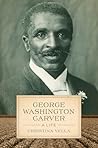
George Washington Carver: A LifeGeorge Washington Carver: A Life by Christina Vella
My rating: 5 of 5 stars

ME, worriedly, every so often: "Please don't tell anyone how much I hate Booker T. Washington so they don't think I'm racist."

ALL FAMILY MEMBERS: "Okay, but you're the most likely person to tell someone that."

And fine, it's true, so here we go:

I hate Booker T. Washington. I think he did a really terrible job running the Tuskegee Institute (he did a really great job founding it--he just did a really terrible job running it!), I think a lot of what he said and did was wrongheaded, I think he should have been open to other leaders' ideas of how best to lift up their people instead of just stubbornly following his own personal brand of black-and-white thinking, I think he got distracted by showmanship too often.

But most of all, I hate him because he was really, really, REALLY mean to George Washington Carver for literally no reason. Washington acted like his whole purpose in life was to serve his people, and then turned around and stole away probably the greatest genius of that time and hid him away and made him work like a dog without any of the resources he could have so easily provided and then when Carver created miracles anyway, Washington acted like those miracles were garbage and just continued trying to stomp Carver down.

And for some reason beyond all comprehension, or really just because that's the kind of guy he was, George Washington Carver LOVED Booker T. Washington, loved him and admired him and had so much affection for him, and in return, Washington's every action toward Carver (after, of course, he'd gone to all the trouble to woo Carver into taking that job at Tuskegee) was filled with just palpable contempt. In George Washington Carver: A Life, author Christina Vella writes that every Christmas, Carver made these beautiful hand-painted Christmas cards for all his favorite people. They were masterpieces. Washington always got one, and barely even acknowledged them. But the next year, Carver would go right ahead and paint him another beautiful masterpiece, and Washington would again be all like, "Meh." But after Washington died (yay!) and another guy took over as head of Tuskegee, Carver went to all the trouble to make that guy his very own hand-painted Christmas card, too, because he was just that nice.

And that guy was so touched that he wrote Carver a genuine multi-paged THANK-YOU NOTE FOR THE CHRISTMAS CARD. THAT'S HOW MUCH HE LOVED IT.


Ugh, Booker T. Washington!

Honestly next I should probably read a proper biography of Booker T. Washington, because right now he exists solely in my mind as a cartoon villain.

He really was VERY mean to Carver, though.

Which I feel like is a pattern that started when Carver was a newborn! Susan and Moses Carver, the people who raised him from the time of his mother’s abduction (at least the official story is an abduction--I’d tell you what I think happened, but I feel like I have already expressed an unhealthy amount of George Washington Carver-centric conspiracy theories in my life and I think I'm already not getting invited to parties about it) to the age of nine or ten, allowed that nine- or ten-year-old to leave home and figure out his own means of sustenance and support when little George, with a knack for learning, decided that an education was what he really, really, really wanted for himself. Vella writes somewhat bemusedly that George didn’t seem to remember much of his childhood and/or would often simply tell some amusing anecdote that he’d contradict in a later interview. She attributes it to absent-mindedness, in that his focus was always elsewhere, but honestly I don’t buy it. As an adult, this dude seemed VERY focused on interpersonal relationships. He treasured his friends, and was kind to fans and acquaintances. I feel like if he couldn’t remember his childhood enough to even give a consistent count for the number of siblings he had, there was a reason for it. And if it wasn’t a memory issue but instead that he didn’t want to talk about his childhood and fiction was easier, well, there was a reason for that, too.

Thank goodness little unhoused Carver met people along the way who did help and nurture and support him, although he clearly witnessed and experienced a lot of trauma, too. And he made his own way. He cleaned houses, he took in laundry, and Vella tells a story in which as a child he talked his way into a job as a personal chef and to cover the fact that he didn’t know how to cook he got the lady of the house to demonstrate how to make every single dish so that he could, as he told her, “make it the way you like it.” And after that, he did!

After making his own way in the world, traveling to wherever there was a school he could learn in, pausing his enrollment periodically as he ran out of money, he finally got enough education to be accepted to Highland College in Kansas. He used the rest of his money to get himself there, but when he showed up, the head of the college was all like, “Oh. Yeah, we don’t actually admit Negros,” and Carver had to simply walk away, broke and with his dreams dashed AGAIN.

I hate you, too, Highland College.

Carver was, if anything, even more poor when he was finally able to attend Simpson College, an art school, and then after that, thanks to a teacher who took him under her wing, Iowa State College. But I feel like Iowa State was where he was the happiest in his entire life. He still cleaned and took in laundry, but Vella notes that his teachers and schoolmates and neighbors would make sure he at least had tons of work, because that’s the only way they could get him to take their money. In 1893, four of his paintings won entry into the Chicago World’s Fair, and Carver was going to get to go see them there. But all his clothes were garbage. So one day, some of his classmates literally kidnapped him off the street, manhandled him into a department store, forced him to try on clothes, and then bought him a beautiful new suit, completely against his will.


And you guys. I cry every time I tell this story, because it is literally so sweet and SO insane, because Carver basically NEVER TOOK THAT SUIT OFF AGAIN IN HIS ENTIRE LIFE. I mean, like, I’m sure he had pajamas, and he spent a lot of time in a lab coat, but if he was dressed up and out and about, he was wearing that suit. That twenty-year-old suit. That thirty-year-old suit. That FORTY-YEAR-OLD SUIT. It was always clean--Carver, after all, was a laundry man!--and it always had a fresh flower in its lapel, but people started to not be able to tell what color it was supposed to be. It was probably, like, dry rotting or something at some point. And sometimes, someone would be like, “Buddy, you want to get yourself a new suit or something?” And Carver, even after he finally had some money--although he never had money like he was supposed to, because Tuskegee never paid him a decent salary, much less the salary he deserved--would just be like, “But clearly I already have a suit I am literally wearing it right now?”

So here’s the thing: Vella makes very clear that Carver was super happy at Iowa State. Some people were for sure racist towards him but a lot of people were not, he had friends, he had mentors, he was learning and he loved it, he was blowing everyone away with how smart he was and how nice and how good he was at everything, and he already had an excellent job lined up right there as soon as he graduated, because these professors did NOT want to let him out of their sight, he was so awesome.

Enter Booker T. Washington.

And okay, to be fair to Washington, the people of Alabama, Black and white but especially Black, were just absolutely beyond destitute at this time. Anything that anyone could do to help them was a very good thing. But Washington had a very black and white, VERY limited idea of what was best for Black people as a whole, and he didn’t give a fuck that it wasn’t what many Black people wanted for themselves--he was going to do for them what HE wanted to do for them, and that’s it.

And what he wanted to do for them wasn’t so much to offer a proper school education, although to be fair Tuskegee did teach literacy and numeracy, but essentially to offer more sophisticated farming and industrial education. I think it was this weird wanting to serve his people but also hating intellectualism vibe that Vella describes that made him 1) work as hard as he did to woo Carver away from his perfect Iowa State prospects, but also 2) shit on everything Carver tried to do and act contemptuous of all his accomplishments and thwart all his efforts because Carver was clearly very intellectually gifted and treasured intellect, and that shone through as much as his kindness did.

So Washington refused to fund Carver’s teaching lab, causing Carver to resort to garbage picking and DIY to stock it. Carver scored a very prestigious federal grant to host an experiment station at the school, and Washington refused to assign him a consistent staff to work it. When Carver succeeded with the station anyway and published useful educational brochures, Washington refused to have them printed. It got so bad that when Washington learned that Carver had been teaching--for free! in his free time!--an extremely popular Bible study class for the past three years, he immediately shut it down. Tell me one reason why he’d do that that’s not from simple spite!

Tuskegee could have furnished his lab if they'd wanted to.

Also, I’m very open to the possibility that the author is biased against Booker T. Washington and has simply passed it onto me. Like I said, I need to read a proper bio about him!

But you know what? Carver took Washington’s contempt and Tuskegee’s garbage and with them, he performed wonders. He genuinely saved Alabama, and the South as a whole, with his research and outreach. Enslavers had used their access to free labor to monoculture cotton to such an extent that the land was completely devoid of nutrients, and so everyone who was still trying to live off the land had resorted to simply growing more and more of that same monoculture just to chase any kind of profit. People were malnourished because they’d converted their kitchen gardens to cotton. Same with their livestock yards. Part of Carver’s extensive research and outreach was finding nutritious, cheap crops and livestock that fed people, turned a profit, and also healed the land. Sweet potatoes. Hogs. PEANUTS!!! People were also longing for more elevated lifestyles but weren’t sure what that would consist of, so were spending their precious money on stupid stuff like fancy clocks and organs that represented culture to them (tangent, but I thought this detail was VERY interesting, because way north in De Smet, South Dakota, the Ingalls family was also spending their precious money on a stupid organ!). So Carver researched methods of making beautiful paints cheaply from the local soils, then taught everyone how to paint their homes and furnishings so they could have pretty things around them without wasting their money.

Another tangent: all throughout the book, Vella just keeps on referring to Carver’s “woman’s voice.” She genuinely goes out of her way to bring this up ALL THE TIME. Carver meets someone famous--they must be surprised to hear his woman’s voice! Carver gives a lecture--people probably thought it was strange hearing a woman’s voice! At one point, I swear she is absolutely giddy because Carver met a woman whom she says had an unusually deep voice, and she’s genuinely all, “OMG I BET IT SOUNDED SO WEIRD! BECAUSE HE SOUNDED LIKE A WOMAN AND SHE SOUNDED LIKE A MAN! AND WHEN THEY TALKED TO EACH OTHER IT WAS LIKE THE OTHER PERSON’S VOICE SHOULD BE COMING OUT OF EACH OF THEIR MOUTHS! HAHAHAHAHA!!!”

So anyway, I kept reading her taking these shots at Carver’s voice and being all, “Dude! Why is she obsessed with saying he sounds like a woman?” So I got on YouTube to see if there are any videos of Carver speaking.


There are. And fine, he sounds like a woman. Just… Vella acts weirdly excited about it, okay?

Anyway, *I* was very excited in the book when Booker T. Washington died, even though it caused Carver to go into genuine mourning for months and also donate half a year’s worth of his pitiful salary to a memorial for that asshole. I’m just so mad at how much of his life he gave up for that man.

There’s another whole weird part of the biography concerning how Carver apparently also gave up another huge chunk of his life to massaging people with peanut oil, because it got published in the newspapers as a miracle cure, causing people to show up from everywhere all the time asking him to, and he was too nice to say no. It’s super weird, though.

Another weird part: although everyone online seems to think that Carver was queer because he was life partners with the lab assistant he had late in his career, Austin W. Curtis, Jr., Vella does not think that this was true at all. Honestly, she low-key makes Curtis out to be a villain who made secret deals behind Carver’s back to profit off of their professional partnership and their friendship. Instead, she puts forth the VERY convincing case that Carver was queer because he was deeply in love with a much younger man whom he met through church stuff. He wrote him obsessive letters for years, letters in which you can literally feel the agonized longing, translated into Jesus-speak. This besottedness went mostly unreciprocated, poor dude. Honestly, I think Carver was probably aroace. His letters of religious fervor to that dude did sound pretty sexy, but I dunno, religion can be weird like that.

Eventually, Henry Ford befriended Carver and built him the fanciest of fancy labs. But you guys, you might as well go ahead and start crying with me again, because by then, Carver was too frail to get much use out of it. He just always worked so hard, and I feel like he never got exactly what he deserved out of life. I guess he’d be proud of his beautiful George Washington Carver Museum at Tuskegee, although I’m low-key mad about it, but his other memorial is literally at his enslavers’ house sooo…

So… I dunno, you guys. All I know about George Washington Carver I learned from his national park site and this biography and some really sketchy online content that I do not believe. People are such weirdos. So, did Vella do me dirty? Is Booker T. Washington actually awesome and now I hate him for no reason? Was Curtis really Carver’s lover and Vella simply won’t say?

Is it super weird that she kept saying he had a woman’s voice? I mean sure, it’s high-pitched--okay, it’s remarkably high-pitched--but she’s being weird about it, right?

P.S. View all my reviews

P.P.S. Want to follow along with my craft projects, books I'm reading, road trips to weird old cemeteries, looming mid-life crisis, and other various adventures on the daily? Find me on my Craft Knife Facebook page!

Monday, August 10, 2026

In Which I Go On A Pilgrimage To George Washington Carver's Hometown

And I am really, really, really super chill about it!

Lol, you KNOW that's not true, if only because I have never ever been chill about a single thing in my entire life ever. Much less that it is objectively impossible to be chill about George Washington Carver, THE MOST PROFOUND GENIUS OF OUR TIME, WHO SPENT LITERALLY HIS ENTIRE LIFE BEING THWARTED AND DIMINISHED AND STIFLED, WHO WAS NEVER ALLOWED TO REACH HIS FULL POTENTIAL AND YET STILL CREATED WONDROUS THINGS, WHO LIVED SOLELY TO SERVE HIS PEOPLE AND LIFT THEM UP AND DID SO UNDER IMPOSSIBLE CONDITIONS THAT WOULD HAVE CRUSHED ANY OTHER PERSON, WHO LOVED HANDICRAFTS AS MUCH AS I DO BUT WAS QUITE A LOT BETTER AT THEM THAN I AM, AND WHO. WAS. QUEER!!!

Anyway, this warning sign on the front door of the visitor center of the George Washington Carver National Monument amused me:


I hadn't ever thought about it, but I guess you cannot conduct place-based, experiential learning at the monument for the guy made famous by peanuts if you've got a peanut allergy!

Bonus point: this was my fourth national park site that I visited over Juneteenth weekend (which was on a Friday this year), and yet this was the only Juneteenth programming that I encountered. And it was really good!


As part of the program, the park ranger gave a rundown of every national park site that honors a Black person or has an emphasis on the Black experience. It was very helpful!

In other news... Okay, I'm just going to come right out and tell you right away that I have mixed feelings about George Washington Carver's national park site being located at his birthplace. 

On the one hand, I do think that the site does all it can, considering its location, to carefully classify the relationship between George and his older brother, Jim, and their former slaveowners with whom they lived until George left them at about the age of 9 or 10. George himself, while writing a short biographical sketch in his old age, referred to them as "Mr. and Mrs. Carver," said that they were "very kind" to him, and thanked them for his "home training." In signage, the site mainly refers to them as the children's "guardians," which is objectively correct. The children were allowed to live in the former slaveowner's cabin with them, there are no accusations or even oblique suggestions in any primary source material that I can find that the children were ever mistreated, and although they were required to work, there also don't seem to be any accusations or suggestions that the children were worked like servants, and not like boys of that time period whose labor was assumed and required. 

However, I feel like placing George Washington Carver's memorial on the site of these former slaveowners' land, where he lived for only a decade at most but where they lived for most of their lives, centers them shamefully in a story that they have no business being more than a couple of paragraphs in. Sure, his childhood home is where he learned to love nature and handicrafts and first discovered his knack for music and art and learning, but that is nothing to the credit of these former slaveowners. They did not birth him. They did not nurture him as parents would. They trafficked and enslaved his mother, then enslaved her children. Moses Carver gave George his mother's spinning wheel and her bill of sale, but he did not give him her wages or any percentage of whatever profit her labor had allowed him. They didn't pay for his education or help him obtain it. George spent the latter half of his childhood unhoused in search of that education, paying for it himself, getting occasional help from total strangers but none from these former slaveowners.

George himself didn't center these people or seem to hold them close emotionally. This is a man who wrote weekly letters for his entire life to people he'd met once (and sometimes never!), who gave handmade Christmas cards and answered every letter he ever received, who wasted his affection on countless people who did not deserve it, but who did not write his former slaveowners, nor did he visit them more than a couple of times. He even lost track of Moses entirely later in the man's life. If he had an emotional attachment to Moses' farm, it must have been a complicated one, perhaps more centered on his brother and the mother he couldn't remember and the place itself than the people who started his life as his enslavers.

But having George's national monument on this land implicitly centers Moses and Susan Carver. It was THEIR land! The visitor center looks out into what was once their cropland that George's mother, Mary, and then George and Jim after her, were required to work for free:


I guess we're being super neutral in this signage, but George didn't have "to build his own lab equipment from scratch, working with what others saw as trash" because Tuskegee Institute itself was poor, which is what I think the signage implies; he did that because Booker T. Washington himself, the head of Tuskegee Institute, literally would not give him the money to buy a single thing. The Institute had the money to equip his lab--they just wouldn't do it.


The hiking trail passes, and you can walk around in, their house that was built after George left them (again, at 9 or 10 years old!) and so he never even lived in it:


The trail also passes the cemetery where several Carvers are buried with their headstones. There are likely at least two of George's siblings also in that cemetery, but their graves are unmarked and can't be pinpointed. Jim, George, and Mary are not buried here:


I don't like it.

Here's as good a place as any to also add my own personal conspiracy theory that I am VERY suspicious of how a childless couple who were not slaveowners made one, and only one ever, purchase of an enslaved person, and that one enslaved person that this childless couple thought it was important enough to purchase was a thirteen-year-old girl. That thirteen-year-old girl went on, while still a child, to have two children who lived past infancy, and each child had a different person named as their father, and each time, the person named as their father was someone who happened to have already died. 

Since George and Jim, as far as we know, were as childless as Moses and Susan, I guess there's no way to figure it out now, but again: I DO NOT LIKE IT.

Okay, that's all I'm going to say about these people. Also, I am trying to limit how crazy I sound on a daily basis, and this has definitely put me beyond my per day limit for today.

Instead, please look at the footprint of the cabin where George Washington Carver was born, and where he lived with his mother for a very, very short amount of time:


George Washington Carver had no memories of his mother, and never saw her again or knew what happened to her (nor do we!), but as an adult he kept her spinning wheel with him in his home, where friends said it was treasured.

Okay, just let me make this one last comparison: holding onto and treasuring a keepsake from a parent you never even knew vs. never visiting and even completely losing track of the person who supposedly raised you for the first ten years of your life. Moses and Susan Carver did not do right by those children.

Here's a sketch George made of the cabin in which he was born:


The museum at the visitor center states that this sketch was made "later in life," but interestingly, I recently read a biography that claimed the sketch must have been made when he was a child, since it's a bit rough and George quickly grew later in childhood to become an incredible artist. That biography also discussed how ill he was for several years at the end of his life, however, including how he lost strength and mobility in his limbs, so I reckon that the visitor center is probably correct. Even later in life he was still a wonderful artist who wielded his medium, and his tools, as well as he was physically able to wield them.

The national monument has turned much of its land into a peaceful, beautiful native meadow, and I think this, more than anything else on the site other than his mother's spinning wheel, is the perfect memorial to George Washington Carver:


I also loved walking through the woods he explored and played in as a child:


There's a sweet statue of a young George in a clearing in the woods, although by all accounts, including his own, he was very much a scrawny, sickly little fellow and so likely did not very much resemble this healthy, hale child. We'll just say it's a statue of young George's spirit of determination, then:


Although one day I want to go to the George Washington Carver Museum at the Tuskegee Institute National Historic Site, there are numerous examples of George's handicrafts and work projects here, as well:


He had a huge collection of specimens that he could have used for pedagogy, but Booker T. Washington never gave his department the space to display them, and the storage allocated for them was vulnerable to the elements and pests, so much of it was ruined.

Labels and annotations in his own hand!


I walked through a lab clearly set up so that the museum could conduct educational programming, and found what would probably have been George Washington Carver's favorite thing here:


He still gets to teach.

In other news, next year I am 100% figuring out how to grow my own peanut plant in the garden. Peanuts are SUPER nutritious, did you know? And super versatile--you can do SO many things with them, like peanut milk!

You should also keep pigs. They're very gentle, eat lots of scraps, and if you can bring yourself to have them slaughtered they're pound-for-pound very much worth the investment in their upkeep.

P.S. Want to follow along with my craft projects, books I'm reading, road trips to weird old cemeteries, looming mid-life crisis, and other various adventures on the daily? Find me on my Craft Knife Facebook page!

Monday, July 13, 2026

Do I Hate Pa Ingalls Or Railroad Tycoons More?

The closest thing I could find in my photo albums to a blizzard-stricken Dakota Territory is an exceptionally snowy day at Fort Necessity.

The Children's BlizzardThe Children's Blizzard by David Laskin
My rating: 5 of 5 stars

The answer is Pa Ingalls, of COURSE. But I also hate railroad tycoons!

One of the things that I like most about Laura Ingalls Wilder’s novels is that she explicitly places them in a specific geographic and historical context that she very much wants to be relatable. She tells her audience that she is writing books about what it was like when their grandparents were children. But Wilder writes these fictional stories about the fictional childhood of a fictional grandparent as someone with no living grandchildren to tell her own real-life stories to. Other than the first-draft memoir Pioneer Girl, we don’t really know what her real-life version of her childhood would have been and how it would have differed from the fictional Little House. We know only a handful of the many stories that Pa, also a storyteller, must have passed down to her and her siblings. But based on what we do know about Wilder, her memoir and interviews, the historical records, and how much trouble librarians have always had figuring out how to shelve the books, we know that her stories are often (mostly?) true to life, sometimes only lightly fictionalized, and sometimes simply more inclined to be an idealized version of her overall tumultuous childhood. We can’t take her words as gospel, obviously--and nor do we, or at least me and my fellow Pa Haters don’t, because it’s clear as day how much Wilder wants us to love Pa. But dang, would it be easier to categorize Wilder’s work if she’d had a better understanding of authorship and journalistic integrity… or maybe not, since her style of outsider art heavily edited by a narcissist daughter with a political agenda and an equally loose concept of authorship is maybe what makes these books so special.

Anyway, all that is simply to say that I read The Children’s Blizzard specifically to directly inform my understanding of Wilder’s The Long Winter, so much so that I also re-read The Long Winter, which will be a tale for another day, but wow. SO much bleaker than I remembered!

And as far as directly informing The Long Winter, it both did? And also didn’t?


The part that was most informative regarding The Long Winter, and the decision-making therein (which again, is explicitly fiction, but could be anywhere from lightly fictionalized to completely invented), was the looming, but rarely actualized, presence of That. Fucking. Train! Reading this book, I’m almost glad that our rail system mostly went the way of the dodo, because those train magnates deserved nothing but bad things! Bad people! Bad! Bad and booo!

Genuinely, though, I actually am really sad about the state of our rail system. I don’t want the train companies to snooker me into moving into a death zone, but I DO want to be able to take the train to Indianapolis and Louisville and Cincinnati and St. Louis, which I could have done 100 years ago! Just give me the 1920 version of train travel without the 1920 version of impending economic downfall!

ANYWAY. The idea behind The Children’s Blizzard is that the train companies lied, cheated, stole, and did whatever else they could get away with (which was basically everything) to get people to move--via train, in many cases!--out to these lands stolen from the indigenous peoples, then when the settlers got there in many cases the train company sold them land they themselves had gotten free from the government, and when the settlers needed supplies, well, guess what? All those supplies came out by TRAIN!

Again, more on that when I write specifically about The Long Winter, but still. Don’t forget that we HATE those train assholes!


It would still be unethical business practices if, when people got to those territories, they discovered that everything was exactly as it had been depicted to them. Even if you really could simply tickle the ground and wheat would grow, the train monopoly would be too powerful to be trustworthy. But the train monopoly was too powerful AND they were a bunch of liars, because the climate in those territories was not suited for what they'd advertised, so not only could people not making a living as promised, but they couldn't even come prepared for what they'd be facing.

Specifically, those winters. They were bad, they were long, and settlers were completely unprepared to survive them. Neither sod houses nor claim shanties had proper insulation, and people were often unable to stock enough food and fuel to see them through to Spring, much less stock enough to keep their animals alive. This Children's Blizzard was unusual only in its suddenness and its timing, which struck most places during the school day, when kids who lived miles from the school house had come to school that day in light clothes appropriate for the warm spell they'd enjoyed that morning. But the cold killed settlers all winter, every winter.

The petty politics of weather forecasters was a necessary but dry part of the book, and you can genuinely skip those sections and still know what’s going on. Guys didn’t always do their jobs correctly, sometimes people were drunk, and telegrams cost money that the government didn’t always want to pay, all of which led to the news about the cold front not getting spread like it should, but I dunno how much of an impact a correct forecast really would have had here. It’s not like kids were checking the morning weather forecast before leaving for school!

What did not inform my re-read of The Long Winter is that this blizzard actually was not the one depicted in The Long Winter. I was sure it was, because Wilder describes a blizzard early in the book that matches the description of the Children’s Blizzard VERY well. But it’s not, oops! It does make me wonder if Wilder drew on newspaper descriptions of that blizzard for her scene, though. But the book was still worth reading, because it did inform my overall understanding of The Long Winter, the migration to Dakota Territory, and the impact of that FUCKING train, ugh!

If you’re into disaster non-fiction (and if you are, then my response to you is “!!!?!!!”), this book pairs well with David McCullough’s book on the Johnstown Flood. They occurred in adjacent years, the painful level of detail about the individual experience of each disaster is similar, and the aftermath is also interestingly similar in terms of the media response. The media loves a darling!

P.S. View all my reviews

P.P.S. Want to follow along with my craft projects, books I'm reading, road trips to weird old cemeteries, looming mid-life crisis, and other various adventures on the daily? Find me on my Craft Knife Facebook page!

Wednesday, May 20, 2026

Sewing American Girl Doll Clothes Is My New Mid-Life Crisis Hobby

One Facebook Story of my little niece holding her brand-new American Girl doll later, and my summer fate is sealed!

The art of sewing doll clothes is fairly new to me, but I always like to learn new things. And once upon a time I would also have told you that the sewing of tiny garments full of fussy, precise details did not appeal to me, but tbh I think that I, myself, am growing fussier as I age, because I kind of don't mind it now. So many precise 1/4" seams! So much tidy edge stitching! Such fussy cutting of novelty prints! I used to hurry through all my sewing to get to the finish as quickly as possible, more than ready to move on to the next exciting thing, but lately I've been pretty into the process, taking my time and focusing on the details and whiling away whole evenings puttering through a project while listening to endless audiobooks.

I just finished Endgame, which was a biography of Bobby Fisher, and now I'm ready for The Long Game, the last book in my hockey smut series!

There are several books of patterns for 18" dolls that I want to sew my way through, and first up is Doll Couture, a book that I actually own but never found the time to dive into when my own little American Girl doll enthusiasts were the right ages to have appreciated my work. Good thing I've got a new audience now!

This simple dress, a sleeveless bodice with a gathered skirt, is my first project:

Highly recommend owning an entire roll of tracing paper--it's so handy!


The instructions in this book are shockingly difficult to parse--they literally didn't tell me that the dress is supposed to come together like this--


--so at every stage I kept trying to sew the skirt into a circle, or stitch the bodice back closed, and once I thought I'd finally figured out what the step I was looking at said to do and ended up sewing the bodice shut at the bottom(?!?), but eventually my very own little Goodwill American Girl doll modeled a well-fitting dress for me:

I literally found her at Goodwill for eight dollars! I LOVE her! I think she's going to be my own personal version of the porch goose, and she's going to have SO many handmade outfits for all seasons and holidays. I need to fix her hair, though, so please send me all your best tips for untangling American Girl doll hair.

And then I sewed another!


I do really like all the tidy details involved, all the edge stitching and stitching down my seams and how nice everything looks when freshly ironed.

Oops, gotta trim that thread!

I experimented with a puffier skirt for the Halloween dress, and I find it much improved.

I really like how well-proportioned small-scale novelty prints look in an 18" doll's garment, and my plan is to use up as many of my novelty prints as possible sewing my niece a wardrobe of doll clothes for her birthday.

I've also been working hard to upgrade my photo set-up:

That's two softboxes plus a giant flexible vinyl panel from Menards that I clamp to my tabletop and sort of slither up the wall to make a seamless backdrop. Vinyl is such a bummer, but I love how it looks.

Now that I've finally cracked what the instructions wanted me to do, this dress is the simplest thing in the world to sew, and it turns out so cute every time. I even upgraded some bits, like fully lining the skirt and finishing the side seams, so mental note to make physical notes so I don't forget!


I considered appliqueing one of the gingerbreads from the skirt fabric onto the bodice, but I thought that it might look too baby-ish to the sophisticated eyes of its future six-year-old recipient. I kind of wish I'd done it anyway, though, because surely one can't have too many gingerbreads on one's outfit!

I had to make myself stop at two dresses for my niece's doll, though, because I have a lot of different patterns that I want to try. But it's surely not too late to sew just a couple of dresses for my own girls' childhood American Girl dolls, so carefully put away in the top of my closet (until I got them out to serve as extra fashion models for these photo shoots, ahem...). 

And of course my own little American Girl doll will need some outfits to wear when she's not helping me out with her fit checks of the garments I'm sewing!

P.S. Want to follow along with my craft projects, books I'm reading, dog-walking mishaps, encounters with Chainsaw Helicopters, and other various adventures on the daily? Find me on my Craft Knife Facebook page!